

How this Journey started for John David and Open Sky Press
Early on October 1st 2021 waking up in a lakeside cottage at our Retreat Center in Ukraine I received an email information. On Amazon I could download an unknown manuscript of Bhagavan’s dialogues from 1936.
The excitement was penetrating deep inside as I struggled with Amazon and my credit card. The manuscript was some 1500 pages and with no formatting, extremely hard to read.
First lots strange drama but going into the middle there were wonderful dialogues between Bhagavan and his visitors. A selection was made, highlighted and put into editing software.
Conversation
Introducing Aham Sphurana
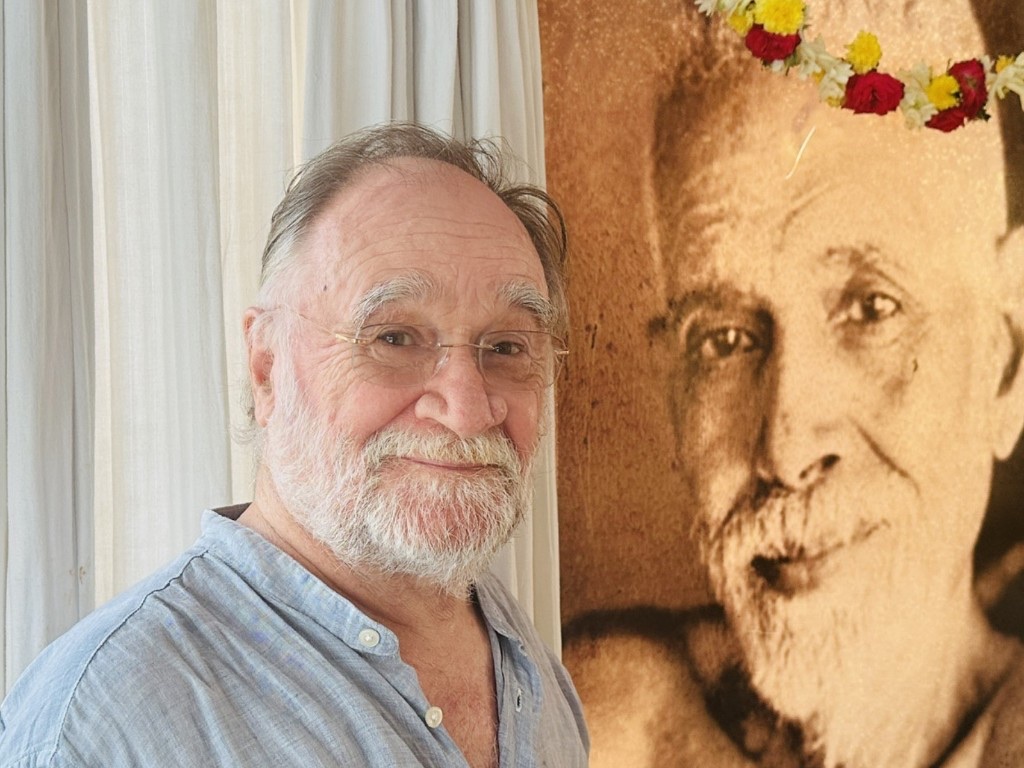
John David sits with Om C. Parkin and shares how a free Amazon manuscript became months of devoted editing — and why the teachings still feel like a living presence.
The Background of Aham Sphurana
Why 1936 matters
The Moment when many Western People arrived at the Ashram as a response to Paul Brunton's Book "A Search in secret India"
Bhagavan at fifty-six
In 1936 Bhagavan was a healthy, active middle-aged man. The jungle hermitage described by Paul Brunton was giving way to stone buildings; Bhagavan was chief cook in the Ashram kitchen and guided Annamalai Swami’s construction work — even drawing plans and making design decisions.
Western seekers arrive
After Paul Brunton’s A Search in Secret India (1934), many seekers came to Tiruvannamalai. Major Chadwick (Sadhu Arunachala) had arrived in 1935; Theosophical Society members from Chennai and visitors from Sri Aurobindo’s Ashram in Pondicherry made their way to meet Bhagavan — giving this record special value.
Richer than Talks
Talks with Sri Ramana Maharshi gives about thirty pages to July–September 1936. The Aham Sphurana selections offer hundreds of pages for the same period — including many dialogues with Western visitors largely absent from Talks, while Munagala Venkataramiah was busy translating.
Saved for eighty-eight years
In 1948 Swami Rajeshwarananda stopped Gajapathi from burning the notebooks and together they brought them to Bhagavan, who was overjoyed. The completed manuscript reached the Ashram after 1950 unpublished; Open Sky Press found it on Amazon in 2021 and, with Athreya’s trust and encouragement from Swami Hamsananda, began editing it into books.
Having reached Aham Sphurana, no further effort is possible… The doubter has long ago given himself up to the infinite beingness that shines in his own heart as the light of the true I.
The Aham Sphurana series
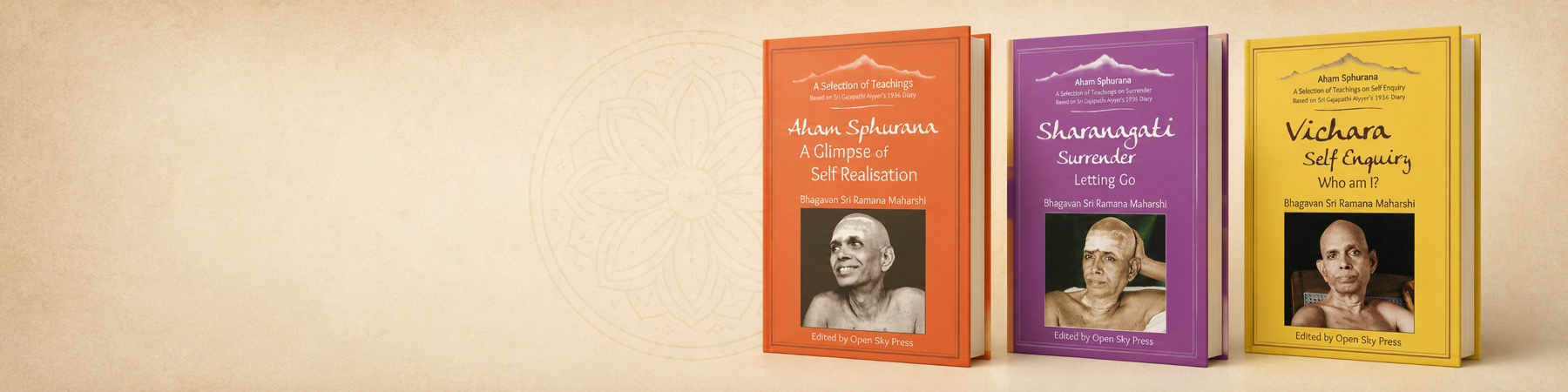
From the Aham Sphurana Manuscript Open Sky Press is publishing a carefully edited trilogy — each volume focusing on a pillar of Bhagavan’s teaching, while also offering an intimate glimpse of Ashram life in 1936.
Selections were first shared on John David’s website blog and on a special Bhagavan Sri Ramana Maharshi page; over time they were refined into the books. Initially only one-on-one teaching dialogues were chosen — then it became clear that Gajapathi’s reporting of daily life around Bhagavan also held valuable practical teachings.
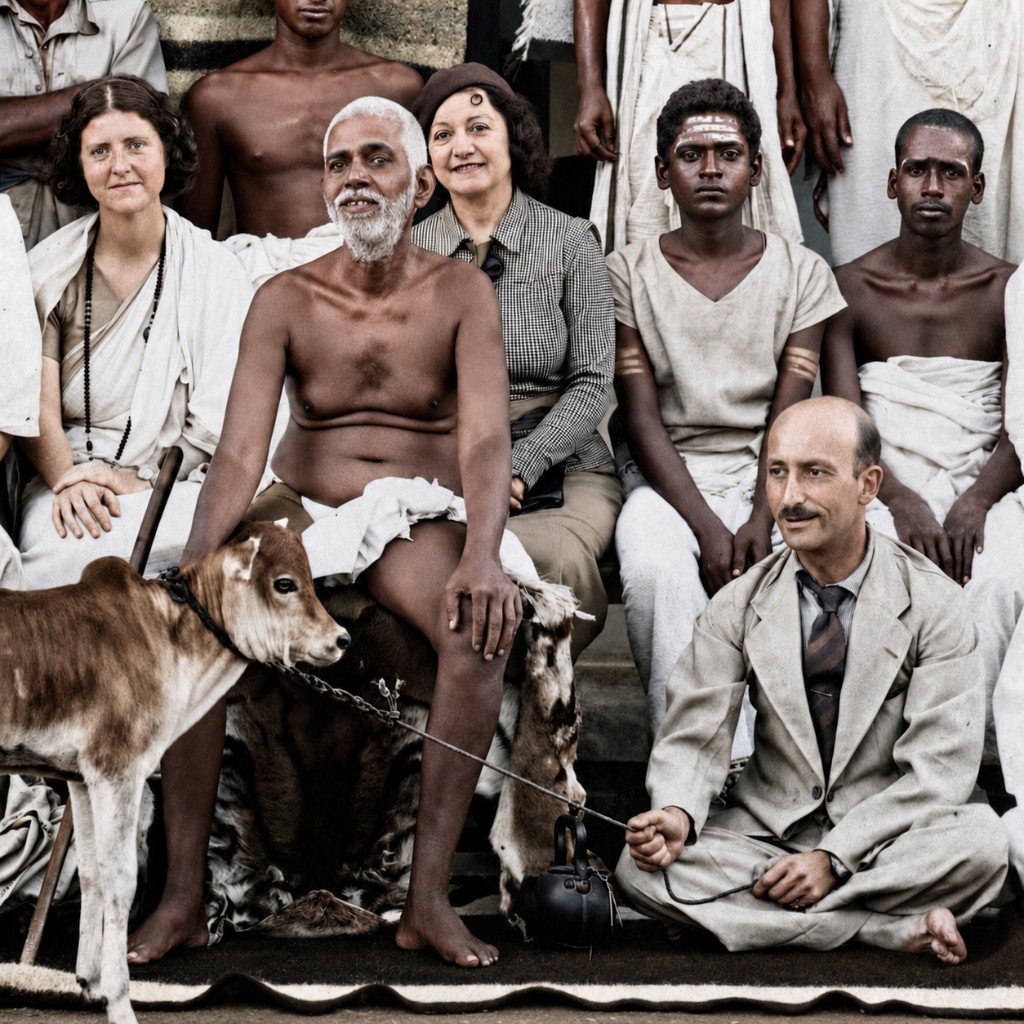
There has not been discovered any confirmed photo of Sri Gajapathi in the Ashram archive. However, this interesting photo from 1936 was for a long time on display in the Ramana Ashram dining room.
Sri Gajapathi stayed in the Ashram from 5th July to 31st December 1936 and could very well be the spectacled, cerebral-looking young man marked as number (1), sitting between his presumed friends Major Chadwick (2) to the right and Annamalai Swami (3) standing to his left. The manager Chinnaswami (4) (Bhagavan’s brother).
In Vichara, Sri Gajapathi’s story is given a larger focus. Beyond his remarkable English, he was also a gifted teacher. He kept careful nightly notes of meetings in the Hall. Those notebooks became the heart of the manuscript later titled Aham Sphurana [“I”-Pulsation]. Of his six-month stay, only three months of the diary have survived.
How Gajapathi met Bhagavan
Swami Rajeshwarananda — later the friend who saved the diaries from being burned — tells of a young man who lost his parents early. Grief left him wary of fate and order. Raised by relatives, he fell into difficult company, then into a severe illness that left him barely able to eat.
One day, sacred ash [thiruneer] from Tiruvannamalai was quietly mixed into his drink. That night he dreamed of a yogi in a simple loin cloth [koupeenam], deep in practice [tapas] in a cave on a mountainside. Thinking of the yogi brought tears to his eyes. When he recovered, his family urged him to visit the Annamalaiyar Temple and give thanks.
As the train neared Tiruvannamalai, he recognised Arunachala as the mountain of his dream. Enquiries led him to Sri Ramana Ashram. At their first meeting, Bhagavan’s glance touched something deep in him; he would not leave. He asked for spiritual initiation [diksha] — and, against his family’s hopes for a conventional life, was allowed to stay for six months. From that day, he said, love for the Master was his only practice [sadhana].
Oh! No. The moment I came here and Bhagavan looked at me, I forgot all about myself. Now I think only of Bhagavan, who is already a Jnani [Self-realised sage]. So for whom am I to ask Jnana [spiritual knowledge]?
Bhagavan:
The secret of Jnana [spiritual knowledge] is bhakti [devotion]. Unselfish Love — motiveless, incessant, intransigent Love — is the key that unlocks the Gate of the Heart once and for all.
Love as his only practice
In his own words, those six months and thereafter he followed only one practice: love for the Master — the same as quietly setting aside personal will so that Bhagavan’s will could take over.
He did not display any siddhis [spiritual powers] except this one: he made me fall in love with him… Here, there are no thoughts, only effortless awareness of being, which surges up to swallow the thought-making faculty whole… and thereafter remains by itself shining as Blissful Love.
Three or four days after arriving he felt a “meaningless desire” to write down the conversations in the Hall. When he did so, he stayed immersed in that current of love; when he resisted, misery returned. He often slept only two hours a night — yet, he writes, his Master saw to his health. He left with a tearful farewell on 31st December 1936, notebooks in hand.
Saved from the fire
After leaving the Ashram he married, studied law, and later practised as an advocate. In 1948, while packing to move to Madras, he meant to burn a heap of old papers. Swami Rajeshwarananda noticed the Ashram notebooks and stopped him — saying gently that if writing them without permission was one offence, destroying them in secret would be a second.
In December 1948 they brought a trunk of red-rexine hardbound notebooks to Bhagavan. He went through them patiently and smiled: “See, how nicely the child has written everything!” When Gajapathi feared the notes might mislead others, Bhagavan answered that someone may have the same doubts — and that there is a destiny guiding the course of events.
A rare last meeting
On the afternoon of 31st December 1948, before Gajapathi returned to Madras, Bhagavan invited him to a rare private meeting in the Hall. What followed was a profound and intimate exchange — which John David, in the editorial notes to Vichara, gently surmises may have been a glimpse of Self-realisation, or a moment of it.
Naming Aham Sphurana
Asked to suggest a title for the combined synopsis, Gajapathi chose Aham Sphurana [“I”-Pulsation], because Bhagavan taught that this state of consciousness is the doorway to final Realisation. He and Swami Rajeshwarananda hoped the teachings would endure for the whole of mankind.
He signed the completed manuscript in Madras, December 1950. A family letter later records that someone called Gajapathi Aiyyer died in a freak accident in his early forties — less than a year after Bhagavan’s Mahasamadhi [passing of a realised sage]. Part of the original material was later lost in a flood at the family home; Athreya, a Bhagavan devotee in Chennai, later typed and shared what remained, including pages from the original notebooks.
Drawn from John David’s Introduction and the author chapter in Vichara · Self Enquiry.
A selection of reviews of Aham Sphurana – A Glimpse of Self Realisation.
“This collection is a profound offering for those who are inspired to deeper inquiry. I have read both for myself and others. Many passages that reveal freshly and intimately the gift that is Ramana Maharshi. This is a book to cherish.”
“I am so touched always by his heartfelt simplicity and by the devotional care of the original transcribers of his wisdom and by your shepherding it into book form to bless the world. May the books have wings to traverse the globe!”
“In telling people about this book, I've compared it to unexpectedly finding a lost Shakespeare manuscript! The notebooks from which this book is edited comprise a newly found treasure trove of Bhagavan's teaching, and his voice comes alive. For any serious student of the Maharshi, this book is essential.”
“In my opinion, Aham Sphurana – A Glimpse of Self Realisation, will become a Treasure Trove of Wisdom to the Seekers of Truth in general, and particularly to the devotees of Bhagavan.”
“An excellent book suitable for anyone serious about the spiritual life and committed to knowing profound and liberating realisations. The beauty of Ramana's teachings shows in the unwavering directness with a remarkable clarity and simplicity. Meditate on the questions and responses. Listen inwardly beneath the mind's activity.”
“I savoured to read Aham Sphurana – A Glimpse of Self Realisation. Really a beautiful book.”
“Thanks for presenting the book. I went through the book and it is indeed a good read. As you have mentioned, certain portions are controversial. However, many portions on Self-enquiry (genuinely in Bhagavan's words) are profound and helpful to the seekers. Pranams”
“Aham Sphurana is the most profound, subtle and practical version of Ramana Maharshi. When you read this book you realise just how diluted, vague and lacking are most of the books published in the name of this great sage of Arunachala. It is not an easy new age read, it is the real deal with all its subtleties and intricacies.”
“What remains is a great text in the style of Talks but immensely better than the more popular Talks. The author, a lawyer visiting the Ashram from July–December 1936, gives an incredible record not only of the teachings but also of Sri Ramana's reactions to day-to-day life. This book is a must for any sincere devotee of Bhagavan!”
“The diary of Ramana Maharshi's teachings has been my almost daily companion for several months. What I also find very remarkable is that the person Ramana comes very close here. After a year of intensive study: Aham Sphurana is undoubtedly still the spiritual book that fascinates and accompanies me the most.”
With John David
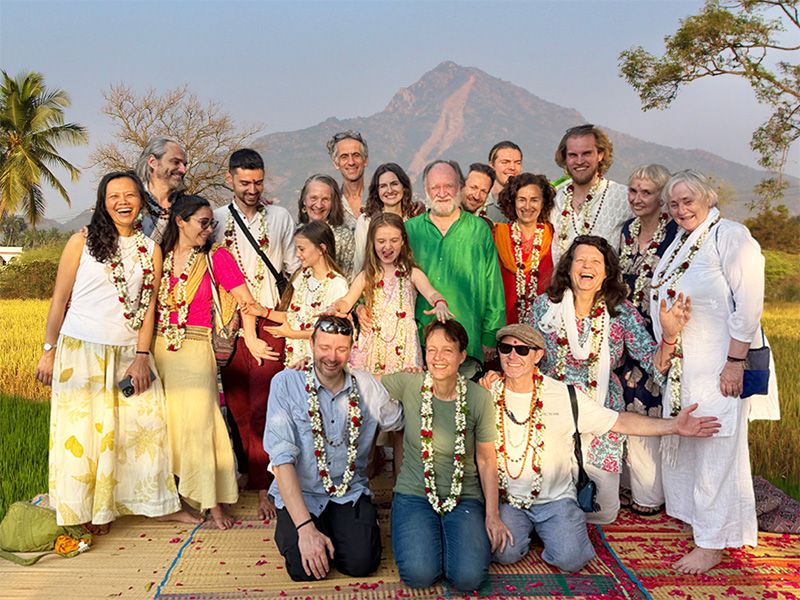
Meet spiritual India
Come to know Arunachala and Tiruvannamalai — the living landscape of Ramana’s teaching. John David has led this retreat every year for more than twenty years, always staying in an ashram there. Together we meet many local masters and discover Ramana’s teachings in the place where they unfolded.